
Against partition, we put forward liberation
An article by Geadis Geadi from the public archive of the previous official website, preserved with its original date and complete text.
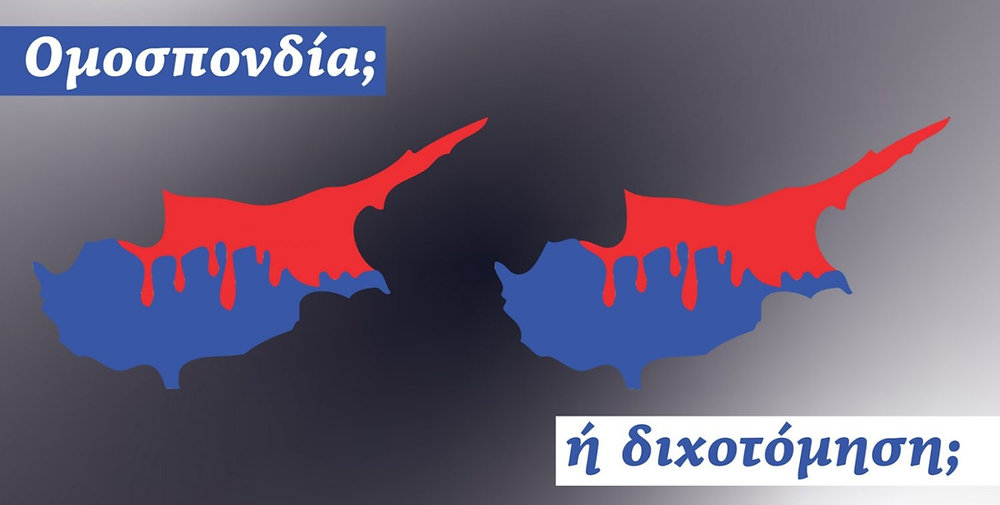
After the emergence of Ersin Tatar as the new leader of the occupation, the proposal for "two states" has become the crown jewel of Turkish communication policy.
The Turkish proposal, which has been artificially placed on the negotiating table, caused a wave of panic in the political world of Cyprus, which stubbornly insists on the DFO solution model, which from the outset seems unsuccessful.
DFO
First of all, as the Republic of Cyprus, we should free ourselves from the dichotomous, racist and undemocratic compromise of the Bizonal Bicommunal Federation type, since this specific settlement of the Cyprus problem goes against the United Nations Charter itself, while blatantly violating fundamental human rights.
As an example, I quote part of the preamble to the United Nations Charter, as ratified on 27/29 September 1945, which states, among other things, “faith in fundamental human rights, in the dignity and worth of the human person, in the equal rights of men and women and of nations large and small”.
Furthermore, it is only in the third paragraph of the first chapter that it is specifically stated that the purpose of the United Nations is “…to develop and encourage respect for human rights and for fundamental freedoms for all, without distinction as to race, sex, language or religion”.
While Article 21 of the Charter of Fundamental Human Rights clearly states that "any discrimination based on race, colour, ethnic origin, language or religion shall be prohibited. Within the scope of application of the Treaties and without prejudice to their special provisions, any discrimination on grounds of nationality shall be prohibited".
Consequently, the aforementioned provisions of the charters of internationally recognized organizations contradict the philosophy of the IDF. At the same time, they invalidate its ardent supporters, since the racist division of the people into two zones, based on ethnicity and religion, is contrary to every concept of law and the principles advocated by the organizations in question.
The two states
It is obvious that Turkish diplomacy and policy, although proposing a "solution" of two states, in reality does not pursues.
First, taking into account Turkey's actions in Libya, Syria, Armenia, etc., we would be at least naive if we imagine that Turkey will give up without a fight the claim to the natural gas deposits located south of Cyprus.
Second, in the case of two states, Turkey's action will be limited to only one "state", without having any right to intervene or control the other.
Is the two-state solution ultimately beneficial for Turkey? And since it seems that it is not, one can reasonably ask what the Turkish side is achieving with the alleged pursuit of two states. The answer is obvious: in this way the Greek and Cypriot governments are artificially led and ultimately trapped in a disastrous dichotomous arrangement, which the one will present as a loose or decentralized Bizonal Bicommunal Federation, while and as a Confederation, with the ambiguity always remaining “constructive”.
The refutation & the fundamental differences
The alleged demand of the Turkish side for two states, combined with the UN Secretary General’s own statement that he is ready to “listen to every point of view in the five-party” despite the fact that he is “committed by the Security Council to the IPA”, refutes those who from time to time, with pomp and excessive “wisdom”, emphasize that the basis for a solution to the Cyprus problem cannot be changed.
The basis for the discussions for a solution to the Cyprus problem can be changed. After all, according to the United Nations Charter, the role of the UN Security Council is not to impose, but to mediate between the warring parties with the aim of settling the differences by peaceful means.
But before some people rush to say that just as we can request a change in the basis of negotiations so can the Turkish side, I should clarify that there is a distinct difference:
The "two states", the PLO, as well as the confederation, constitute an attempt by Turkey to legitimize the fait accompli that it wants to impose by force after the illegal invasion and ongoing occupation of our homeland, since 1974.
Let me just remind you that the UN Charter clearly states that all states must refrain from the threat or use of force, while it does not give any state the right to “intervene in matters essentially within the domestic jurisdiction of any state.”
Furthermore, “displacement or forcible transfer of population” constitutes, according to international law, a crime against humanity, which Turkey committed in 1974 with the use of weapons, forcing Turkish Cypriots to move en masse to the northern part of the island and simultaneously expelling Greek Cypriots from their villages and ancestral homes.
Therefore, this specific arrangement cannot be accepted by the UN, let alone by us, since it violates every concept of law.
The only solution is liberation
On the contrary, the only viable, functional and democratic proposal that can be implemented is the solution of a Single State.
The Cypriot political leadership, the governments of each time, as well as Greece, which is our natural ally, should free themselves from the syndrome of submission and subservience, leaving aside the policies of appeasement. They must finally stand up and claim what historically and legally belongs to Cypriot Hellenism, namely the liberation of our homeland.
To achieve this, vision is needed, but above all, the drafting of a new national strategy. There are ways. Unfortunately, what is missing is the political will from the outdated political system, which is trapped in a vicious circle of mistakes and concessions, to which it has gradually fallen, through the negotiations so far.
Geadis Geadi Political Scientist ELAM Press Spokesperson