
From British colonialism to the French alliance
An article by Geadis Geadi from the public archive of the previous official website, preserved with its original date and complete text.
The article was hosted: - in Foreign Affairs
- in New Economy
- in Militaire
- in the newspaper Simerini - in E.L.A.M. - in Huffington Post - in Sigmalive
It is obvious that the agreement between the USA, Britain and Australia (known as AUKUS), has changed the data at a global level, partially shifting the geopolitical interest. At the same time, once again, it is demonstrated that the USA will not abandon global hegemony so easily.
Analyzing this agreement, we conclude that it played an important role in the conclusion of a military agreement between Greece and France, as we will see below, which the Republic of Cyprus must utilize to its advantage.
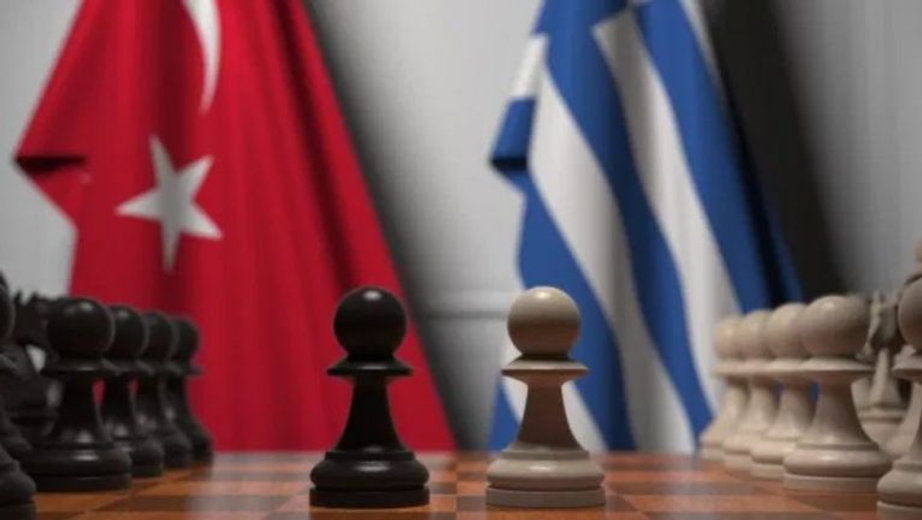
However, the fluidity of the data on the international chessboard is indisputably confirmed, since each international development, depending on its scope, has a chain effect, either positively or negatively, on many other actors in various parts of the planet.
The melting of the ice creates new data
For decades, the frozen Arctic circle has been inaccessible, simultaneously limiting the routes of maritime trade. Today, the melting of the ice is changing the data, as it “also allows access to the extraction of energy resources, which in itself, as an event, can change the balance, but at the same time, transforms Russia into a huge land power with the characteristics of a naval power[1]”.
It is easy to understand that the opening of a new route will consequently weaken the remaining trade routes, as recently happened with the Suez Canal, which borders the Republic of Cyprus.
Consequently, “the rapid and significant changes in climatic data, combined with geopolitical power redistributions[2]”, create new conditions, as Professor of Geopolitics Ioannis Th. Mazis has very correctly identified some time ago.
What is briefly described above can explain to some extent the US move towards the AUKUS agreement.
At the same time, let us not forget that “in the last two decades, the Indo-Pacific region has become the new driving force of global economic growth”, since it produces “almost 40% of global wealth, according to an official French report. Furthermore, according to the IMF, the Indo-Pacific will account for more than 50% of global GDP by 2040 and its markets are estimated to account for 40% of global consumption.[3]”
Greece – France Agreement
France, as the country with the largest EEZ worldwide[4], is directly affected by this agreement (AUKUS), since we can say that the Indo-Pacific is an “EEZ” for France. It is worth mentioning that “it includes French citizens, economic entities, over 8,000 soldiers and bases of all armed forces, while in the economic field, it is the second region in exports for France after the EU[5]”
As Celia Belan, a specialist in transatlantic relations at the Brookings Institution[6], also estimates, “this specific agreement (AUKUS) dealt a strong blow to France”, while, subsequently, she states that “after such an insult, it is very important for the French to focus on Europe”.
The above events contributed or rather helped to lead us to the upgrading of France’s role in the Mediterranean and ultimately to the establishment of a strategic partnership for cooperation in defense and security between France and Greece. Greece's move to take advantage, albeit belatedly, of this international situation is of utmost importance since it is a matter of national survival.
Cyprus must not remain uninvolved
The strategic agreement between France and Greece has also brought enthusiasm to the Greek Cypriots. The Republic of Cyprus, however, must not remain uninvolved in the developments, but must make the most of this situation and move along the same strategic axis, taking into account what is happening.
It is necessary to re-establish the Unified Defense Space Doctrine, as well as to create a Unified Energy Doctrine with the Greek Government, which will include, among other things, the delimitation of the EEZ and the creation of a Natural Gas pipeline (EastMed) between Greece and Cyprus, thus isolating Turkey from the energy game in the region.
And in the background, France
For the French Republic, Cyprus is of outstanding geopolitical importance, since it is directly related to the strengthening of its presence in the Eastern Mediterranean and directly affects its economic interests. The activity of the French TOTAL in sea areas of the Cypriot EEZ is recalled as an example.
As Mr. Mazis rightly points out, "France is quite far from the Eastern Mediterranean and because of this its staffs should plan with a forecast of more than a week. Essentially, the only element ensuring France's presence in the Eastern Mediterranean is its aircraft carrier (Charle de Gaulle), which, however, is one and only with all that this entails. France, therefore, during the periods when its aircraft carrier is out of service, cannot conduct large-scale operations in the Eastern Mediterranean.[7]”
Therefore, “Given France’s Strategic Interest in the Eastern Mediterranean, the only short-term and feasible solution is to conclude an agreement with the Republic of Cyprus in order for French Armed Forces to be permanently present on its territory. The most economical solution would be to create a Task Force similar to those maintained by France in Chad, which would include troops from all three branches (Army, Air Force, Navy).[8]”
Then, documenting his proposal, he cites specific proposals with available facilities in the Republic of Cyprus, which could be utilized for this purpose, such as:
1. The Andreas Papandreou Air Base (ABAP) in Paphos, which is of NATO standards.
2. The Larnaca International Airport, which is of a civilian type.
3. The Port of Limassol, where French ships periodically anchor (and has the ability to support the aircraft carrier).
4. The Port of Larnaca, which has the ability to accommodate large ships of the French Navy.
5. The naval base in Mari.
The creation of a military alliance and French bases in Cyprus, “creates a network of power projection in the Eastern Mediterranean – Middle East – Suez – Horn of Africa complex due to geography.[9]”
All of the above proposals, whether individually or in combination, have both advantages and disadvantages, which are analyzed in the relevant article in “Sunday Democracy”. One of the main obstacles identified is the interference of British bases in Cyprus.
British colonial bases
According to the Treaty of Establishment of the Republic of Cyprus signed on 16 August 1960, the areas of Akrotiri Base and Dhekelia Base remain under the sovereignty of the United Kingdom[10], with the Republic recognizing their rights and ensuring their effective operation, in accordance with the annexes to the Treaty.
These bases, which are characteristically called “Sovereign Bases”, “essentially abolish the exercise of sovereignty of the Republic of Cyprus over part of its territory[11]”, therefore proving to be “one of the worst remnants of colonialism[12]”.
Given that “the decolonization of Cyprus was not completed in full, and the Principle of Self-Determination was not fully implemented[13]”, the Cypriot government of the time inherited a debt owed to the Greek Cypriot community to completely eliminate every vestige of British colonialism, which brought only suffering and a truncated independence to the island.
There are a number of favorable conditions that can be exploited by the Cypriot side in order to achieve the withdrawal of the bases. More specifically:
– Brexit
The United Kingdom’s withdrawal agreement from the EU, which entered into force at midnight on 31 January 2020[14], turns Britain into a third country, since it is no longer a member state of the EU.
– The decision of the Supreme Court of the United Kingdom
The legal status of the Bases area was discussed and largely clarified on 30 July 2018 by the Supreme Court of the United Kingdom and more specifically, in the case "On the application of Tag Eldin Ramadan Bashir and others v Secretary of State for the Home Department". "The Court held that the independence of Cyprus, which in the British legal order was achieved by the Cyprus Act of 1960, did not change the political status of the bases, which remained colonies, unlike the remaining 97% of the island which became independent[15]". Therefore, it characterizes the Sovereign Base Areas of Akrotiri and Dhekelia as a colony, since they constitute an area of exclusive and complete sovereignty of Great Britain on the one hand and a remnant of the former British colony in Cyprus, on the other.
– The decisions of the UN General Assembly
Repeated decisions of the UN General Assembly explicitly state that the so-called rights or privileges of former colonial powers in former colonies, as vestiges of colonialism[16] and therefore illegal.
– The decision of the International Court of Justice in The Hague
On 25 February 2019, the International Court of Justice, regarding the Chagos Archipelago, ruled that the United Kingdom has an obligation, as soon as possible, to put an end to the presence of the Bases from Saint Mauritius.
This specific case is of interest to Cyprus, as there are significant similarities and useful findings, since “there was no referendum but only the consent of the then government after external pressures and always with the “carrot” of independence[17]”. At the same time, it clarifies “fully and beyond all doubt that the Principle of Self-Determination of Peoples constitutes an obligation erga omnes[18]”, i.e. towards everyone. That is, “every State, every international organization and the international community as a whole has the right to demand their observance[19]”.
However, to return to the decision in question, the Court ruled that consent could only be achieved through a referendum before the decision was taken[20]. “In this way, the Court concluded that the decolonization process of Mauritius was not completed lawfully as it violated the principle of Self-Determination of Peoples[21]”.
In summary, it is clear that the Republic of Cyprus can add weapons to its quiver, which will help it get rid of the presence of the British Bases, as long as there is the corresponding political will.
For those who may express concerns about such a move, we are reminded of the long-standing hostile and at the same time subversive attitude of the British towards the righteous of Hellenism. Therefore, Cyprus does not have to lose an ally or a friendly neighboring country.
Transition from colonialism to alliance
The withdrawal of the colonial bases from Cyprus opens a window of opportunity for the Republic of Cyprus, which it can exploit to the best of its ability.
More specifically, after the territories occupied by the British come under the ownership of the legitimate administration, namely the Republic of Cyprus, in a second year the military installations can be granted for the purposes of a military alliance with France.
The aforementioned proposal may well constitute an extension of the existing agreement between Greece and France. Furthermore, it is a development that the French Republic will see with a positive eye, since its interest in the Eastern Mediterranean, as well as the wider Mediterranean region, is known.
In the context of the above military agreement, the Republic of Cyprus, rather than leasing the area of the military bases to the French Republic, may in return request the concession of military equipment, such as frigates [FDI HN (also known as Belh@rra)], corvettes (Gowind), fighter aircraft (Rafale), which will upgrade its military deterrent power and capability. At the same time, the agreement may also provide for a “mutual defense assistance clause” if an attack on its sovereignty is detected by another country.
It is emphasized, however, that all of the above requires the Government and political leadership to abandon the phobic syndromes, finally charting a national deterrence strategy.
The above moves do not simply upgrade the Republic of Cyprus, but overturn the balance of power and the "small" Cyprus is transformed into an important actor in the Eastern Mediterranean, which in combination with the prescribed rich energy future can stand tall and finally claim the self-evident and inalienable rights of Cypriot Hellenism and mainly liberation.
Geadis Geadi Political Scientist
References:
[1] Elias Hadjikoumis, The Melting of the Arctic Circle Ice and its Impact on the Geopolitical Balance of Power, April 15, 2021 - https://infognomonpolitics.gr/2021/04/i-tixi-ton-pagon-tou-arktikou-kyklou-kai-oi-epiptoseis-tis-stin-geopolitiki-isorropia-dynameon/ [2] Ioannis Mazis, Geopolitical Reality in the Greece-Cyprus Dipole, 2014 [3] Nikos Vassilopoulos, AUKUS: Chessboard Moves from France and the USA, September 20, 2021 - https://www.insider.gr/politiki/190187/aukus-kiniseis-skakieras-apo-ti-gallia-kai-tis-ipa [4] World Atlas, Countries With The Largest Exclusive Economic Zones, June 29, 2018 - https://www.worldatlas.com/articles/countries-with-the-largest-exclusive-economic-zones.html [5] Nikos Vassilopoulos, AUKUS: Chessboard Moves from France and the USA, September 20, 2021 - https://www.insider.gr/politiki/190187/aukus-kiniseis-skakieras-apo-ti-gallia-kai-tis-ipa [6] AUKUS: France's Dangerous Bet After the Head-On with the USA and Australia, "Kathimerini" Newspaper, September 20, 2021 - https://www.kathimerini.gr/world/561505300/gallia-to-epikindyno-stoichima-meta-ti-metopiki-me-ipa-kai-aystralia/ [7] Ioannis Mazis, Installation of French Forces in Cyprus, “Sunday Democracy” Newspaper, July 2021 [8] ibid. [9] ibid. [10] Iosif S. Iosif, Cyprus Problem and International Politics, 2000 [11] Emmanuel Roukounas, Public International Law, 2019 [12] ibid. [13] Paschalis Chatzopoulos, The legality of British bases in Cyprus according to the customary law of self-determination of peoples, 2019 - https://repo.lib.duth.gr/jspui/bitstream/123456789/13479/1/ChatzopoulosP_2019.pdf [14] Official website of the Council of the EU and the European Council, Withdrawal of the United Kingdom, 20 October 2020 - https://www.consilium.europa.eu/el/policies/eu-uk-after-referendum/# [15] Paschalis Chatzopoulos, The legality of British bases in Cyprus according to the customary law of self-determination of peoples, 2019 - https://repo.lib.duth.gr/jspui/bitstream/123456789/13479/1/ChatzopoulosP_2019.pdf [16] Giannakis Omirou, Our stance towards Britain, Simerini Newspaper, February 2, 2019 - https://simerini.sigmalive.com/article/2019/2/2/e-stase-mas-enanti-tes-bretanias/ [17] Paschalis Chatzopoulos, The legality of British bases in Cyprus according to the customary law of self-determination of peoples, 2019 - https://repo.lib.duth.gr/jspui/bitstream/123456789/13479/1/ChatzopoulosP_2019.pdf [18] ibid. [19] Emmanuel Roukounas, Public International Law, 2019 [20] American Society of International Law, The Chagos Advisory Opinion and the Decolonization of Mauritius, 2019 - https://www.asil.org/insights/volume/23/issue/2/chagos-advisory-opinion-and-decolonization-mauritius [21] Paschalis Chatzopoulos, The Legality of British Bases in Cyprus under the Customary Law of Self-Determination of Peoples, 15 April 2019 - https://repo.lib.duth.gr/jspui/bitstream/123456789/13479/1/ChatzopoulosP_2019.pdf